Anthropic and the agents that operate computers: the end of advisory-only AI
Anthropic moves from AI that answers to AI that acts. Understand what changes for SMB operations in sales, support, and processes.
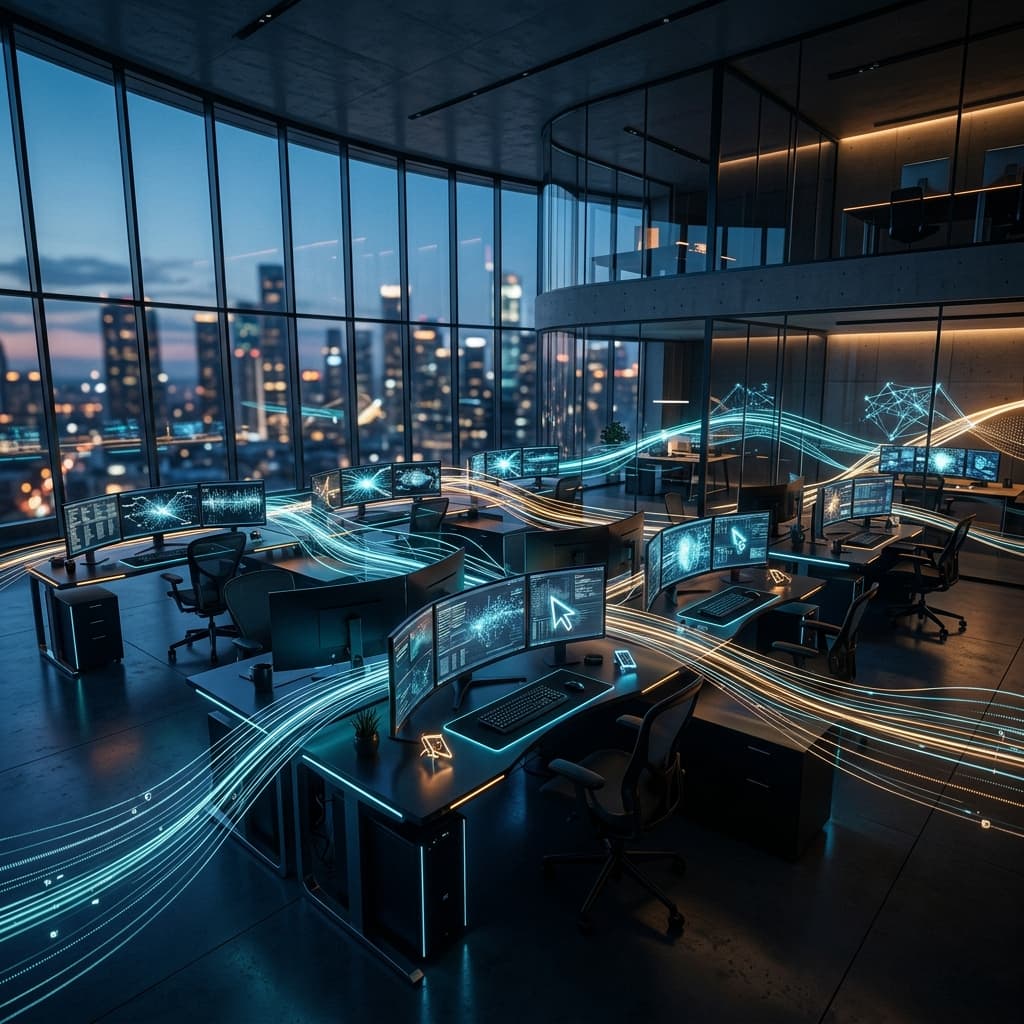
For years, the sales pitch for artificial intelligence in business revolved around a carefully bounded promise: AI will help your team make better decisions. It suggests, summarizes, classifies. Humans are still the ones who execute. That implicit contract is being rewritten — and Anthropic is one of the most deliberate companies driving that shift.
The company, founded in 2021 by former OpenAI researchers, is not merely updating its Claude model. It is building a layer of autonomous agents capable of navigating graphical interfaces, triggering external tools, and completing entire workflows end to end — without a human needing to mediate every step. There is a technical name for this: computer use and tool use. And it has very concrete practical consequences for any business that still relies on people to move information between systems.
What Anthropic is building, exactly
Claude, Anthropic's flagship model, now natively supports the concept of tool use — the ability to call external functions, query APIs, search databases, and execute actions in third-party systems as part of a reasoning chain. More recently, the company advanced into computer use: the agent can see the screen, move the cursor, click buttons, and fill out forms, exactly as a human operator would.
This is not science fiction. Anthropic made computer use available in beta to developers via API as early as 2024, with demonstrations showing the agent browsing the web, opening files, and interacting with conventional software. Access is provided through the Claude 3.5 Sonnet API, priced on an input/output token model — the same one already familiar to anyone using Claude for text generation.
The difference from what already exists
Automation tools such as Zapier, Make (formerly Integromat), and UiPath have been around for years. The fundamental difference with Anthropic's agents lies in the reasoning layer. Traditional automation platforms follow fixed rules: if X happens, do Y. When the scenario departs from the script — a field moves, an email arrives in an unexpected format, a step depends on contextual judgment — the automation breaks and a human must intervene.
An agent built on Claude can interpret ambiguity, adapt the next step based on what it encountered, and, when necessary, ask for clarification before acting. It is the difference between a script and a trained junior employee. Neither is perfect, but one of them can improvise.
Why this matters for SMBs in Brazil right now
A large share of small and medium-sized Brazilian businesses operate with fragmented technology stacks: CRM in one system, ERP in another, customer service in a chat tool, invoice issuance in a separate portal. Integrating all of it via API requires custom development — expensive, slow, and brittle.
Agents with computer use open a shortcut: instead of building a technical integration between systems, you teach the agent to operate each system as a human would. It opens the portal, logs in, extracts the information, moves to the next system, and records it. No rewriting the stack. No six-month development contract.
The most immediate use cases fall into three areas:
- Sales and CRM: lead qualification, record updates, sending follow-ups based on triggers defined by the team.
- Customer support: ticket triage, querying customer history across multiple systems, drafting responses for human approval or direct sending.
- Operations and back office: reconciling data between spreadsheets and systems, generating reports, filling out regulatory forms.
The practical lesson: where to start
The temptation is to want to automate everything at once. That is the surest path to frustration. What works — and I have tested this with clients across different sectors — is to start by mapping the repetitive processes that consume the most time from qualified people. Not the most complex processes, but the ones that bleed the most team hours without requiring genuine judgment.
Then, choose one complete, self-contained workflow — a process with a well-defined beginning, middle, and end — and test whether an agent can execute it with human supervision at the end. Not as a full replacement, but as a first draft that a human reviews and approves. This hybrid model reduces risk and accelerates organizational learning.
What is still a real limitation
It would be dishonest not to mention the constraints. Anthropic's computer use is still in beta, and the company itself warns of failures in tasks involving many chained steps, interfaces with high visual variability, or systems that require complex multi-factor authentication. Execution speed and cost per task must be calculated before any decision to scale.
Security is also a critical variable: an agent with access to internal systems requires clear permission policies, action auditing, and well-defined boundaries on what it can or cannot do without human approval. This is not optional — it is the bare minimum for a responsible deployment.
The signal the market needs to read
Anthropic is not alone in this movement. Google, OpenAI, and startups such as Cohere and Mistral are racing in the same direction. What this signals is not a feature race — it is a paradigm shift in the role of AI within a business operation.
The question every manager should be asking today is no longer "how can I use AI to help me think." The right question is: which steps in my current process require no human judgment and could be executed by an agent tomorrow? Whoever maps that answer first pulls ahead — not because they adopted new technology, but because they structurally reduced operational costs and freed their team for the work that genuinely depends on people.
Hyperautomation by 2028: What Gartner's Forecast Changes for SMBs
Gartner predicts that 70% of companies will adopt hyperautomation by 2028. For Brazilian SMBs, this changes everything — find out where to start.
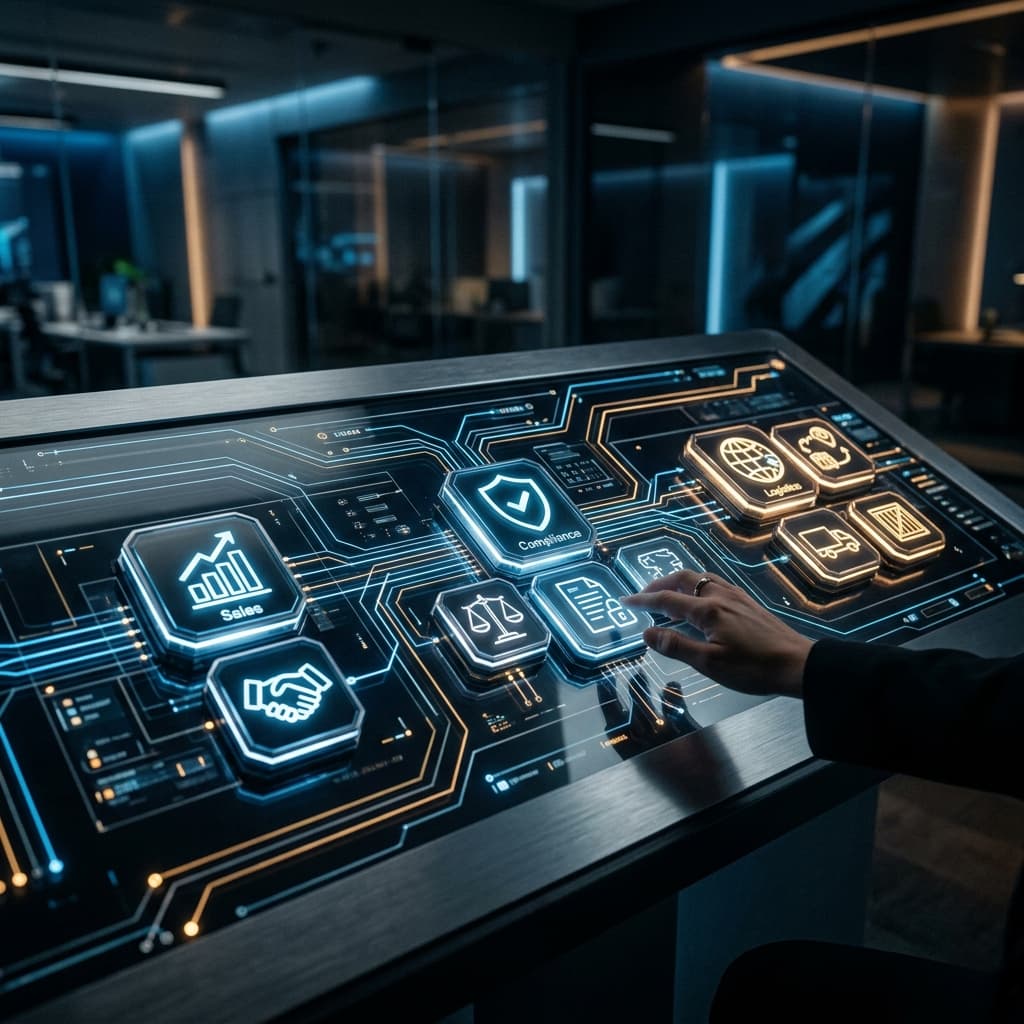
Verticalized Agents: The New Front in Automation for SMBs
Domain-specialized AI agents are replacing generalist models and enabling SMBs to automate complex tasks at low cost.
Autonomous AI Agents: the new core of the company in 2026
In 2026, AI agents stop being an experiment and become infrastructure. What changes for Brazilian SMEs that need to compete with fewer people.