The Factory That Manufactures Itself: Chinese Robots in Foshan
In Foshan, humanoid robots build other robots without human intervention. What does this mean for Brazilian SMEs now?
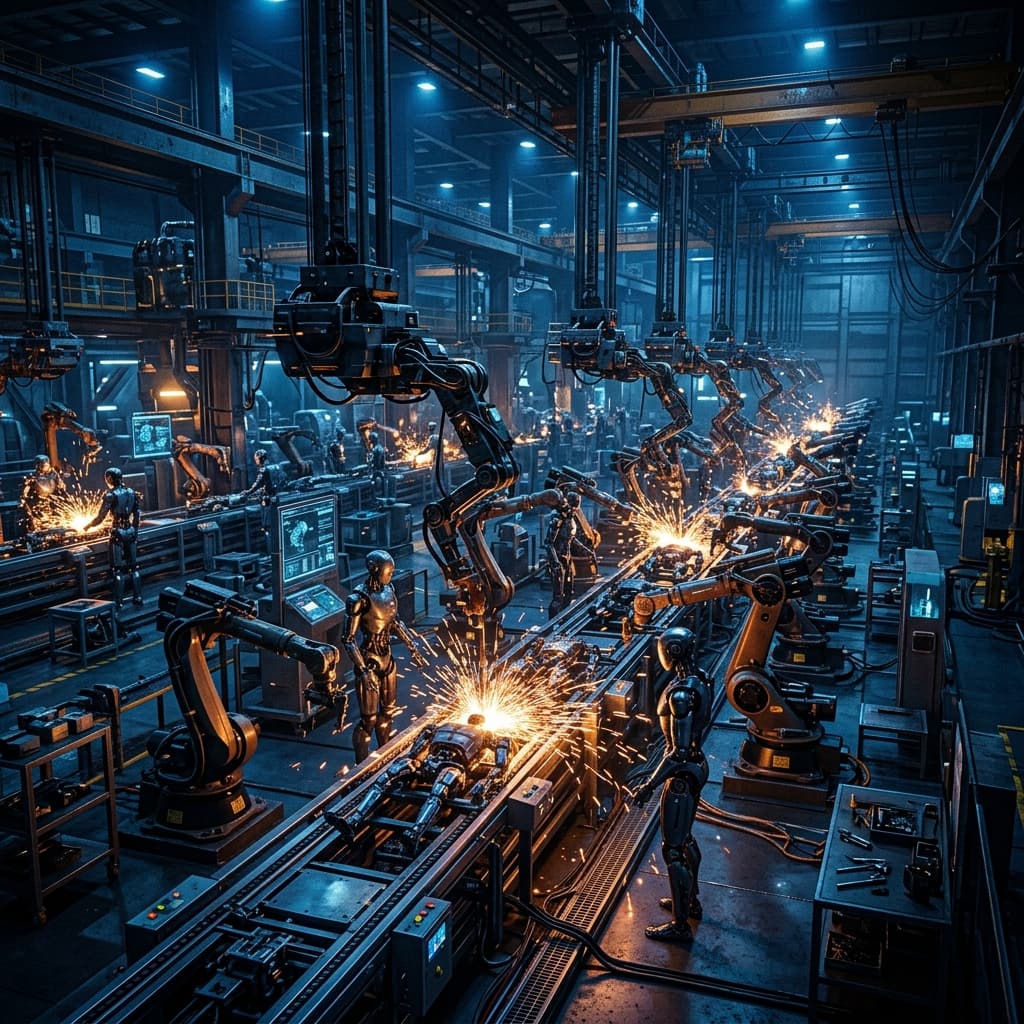
Somewhere between science fiction and the quarterly earnings report, China crossed a line the industrial world is still trying to process. In Foshan, in Guangdong province, a factory opened in 2025 operates with humanoid robots building other robots, without human operators on the production line. Installed capacity: 10,000 units per year. The project name is as direct as the concept: a "dark factory", a factory in the dark, because there are no humans who need light.
This is not a laboratory experiment. It is manufacturing at industrial scale, and what it signals for the global market, including Brazilian SMEs, deserves more attention than it usually receives.
What Is Happening in Foshan, Exactly
The factory is operated by Agibot (also known as Zhiyuan Robotics), one of the fastest-growing humanoid robotics startups in China, with more than US$400 million raised by early 2025. The production line robots are model A2, designed to perform physical manipulation tasks with dexterity close to human level, such as tightening screws, fitting components, and moving subassemblies between stations.
The differentiator is not only the absence of humans, it is the process feedback: robots trained in simulation and adjusted with data collected in the factory itself manufacture the next generation of robots, which in turn generate more operational data. It is a closed cycle of continuous improvement, without the bottleneck of human scale.
For comparison: Tesla, which operates its Gigafactory in Austin with a high degree of automation, still keeps thousands of human workers on the lines. Foshan eliminates that dependency, at least in the assembly stages that Agibot has mapped so far.
Why Mass Production Changes the Price Equation
There is a simple logic, but many SME managers still have not incorporated it into planning, when robot production scales, unit price falls. The same phenomenon that made solar panels affordable between 2010 and 2020, a cost reduction of more than 90% per watt installed, is about to occur with physical industrial robots.
Today, a humanoid robot with industrial manipulation capability costs between US$20,000 and US$50,000, depending on configuration. Industry analysts project that, with lines like Foshan operating at full capacity and competing among themselves, that value can fall to the range of US$10,000 to US$15,000 by 2027, a short horizon for any strategic planning cycle.
For a Brazilian SME with a mid-sized production line or logistics operation, that difference is what separates "unviable" from "calculable".
What This Means in Practice for an SME
I work with SMEs in Brazil, Italy and the US, and the pattern I see is always the same: physical automation is perceived as too expensive, too complex, too distant. That perception is becoming outdated.
Three concrete implications for those planning today:
1. The entry cost will fall, but the window of competitive advantage is now. Companies that begin mapping automatable processes today (order picking, simple component assembly, visual inspection, palletizing) will be ready to integrate equipment when the price reaches the point of viability. Those who wait for the price to fall to start the project will lose 18 to 24 months of advantage.
2. The learning curve is the real asset. It is not the robot that generates value, it is the operational data collected over time. Which task does the robot fail more often? Under which temperature or lighting conditions does it fail? These data, accumulated from day one of operation, are what separate mediocre automation from one that pays back in 18 months. SMEs that enter early build this asset before the competition.
3. Systemic integration is the new bottleneck. The robot itself will become cheaper and more accessible. What will continue to be expensive, and where consultancies like FM Solutions operate, is the integration with ERPs, order systems, quality control and existing logistics flows. The complexity migrates from hardware to software and to process redesign. Those who underestimate this stage will have an expensive robot idle, waiting for someone to resolve an API.
The Signal Foshan Sends to the World
The Foshan factory is not only an engineering feat, it is a market argument: China is positioning its robotics value chain as the most verticalized and scalable in the world, from chip to actuator, from simulation software to autonomous assembly line. This has geopolitical and commercial implications that go far beyond the technology.
For the Brazilian business owner, the practical signal is this: the global infrastructure for physical robotics is entering a phase of commoditization. What was a privilege of German automakers and American e-commerce giants will, in the next three to five years, become an accessible capital decision for mid-sized companies.
The relevant question is no longer "does robotics make sense for my business?" The right question is, "Which process do I need to map today to be ready when the price gets where it will get?"
Foshan has already answered the first question. The second is yours.

Thinking Machines Lab launches Inkling: 975 billion open-weight parameters
Mira Murati's Thinking Machines Lab launches Inkling, an open-weight MoE model with 975 billion parameters. What changes for Brazilian companies?

Kimi K3: the largest open-weight model ever released has 2.8T parameters
Moonshot released Kimi K3: 2.8 trillion parameters and a 1-million-token context window. What actually changes, and what open-weight really delivers.
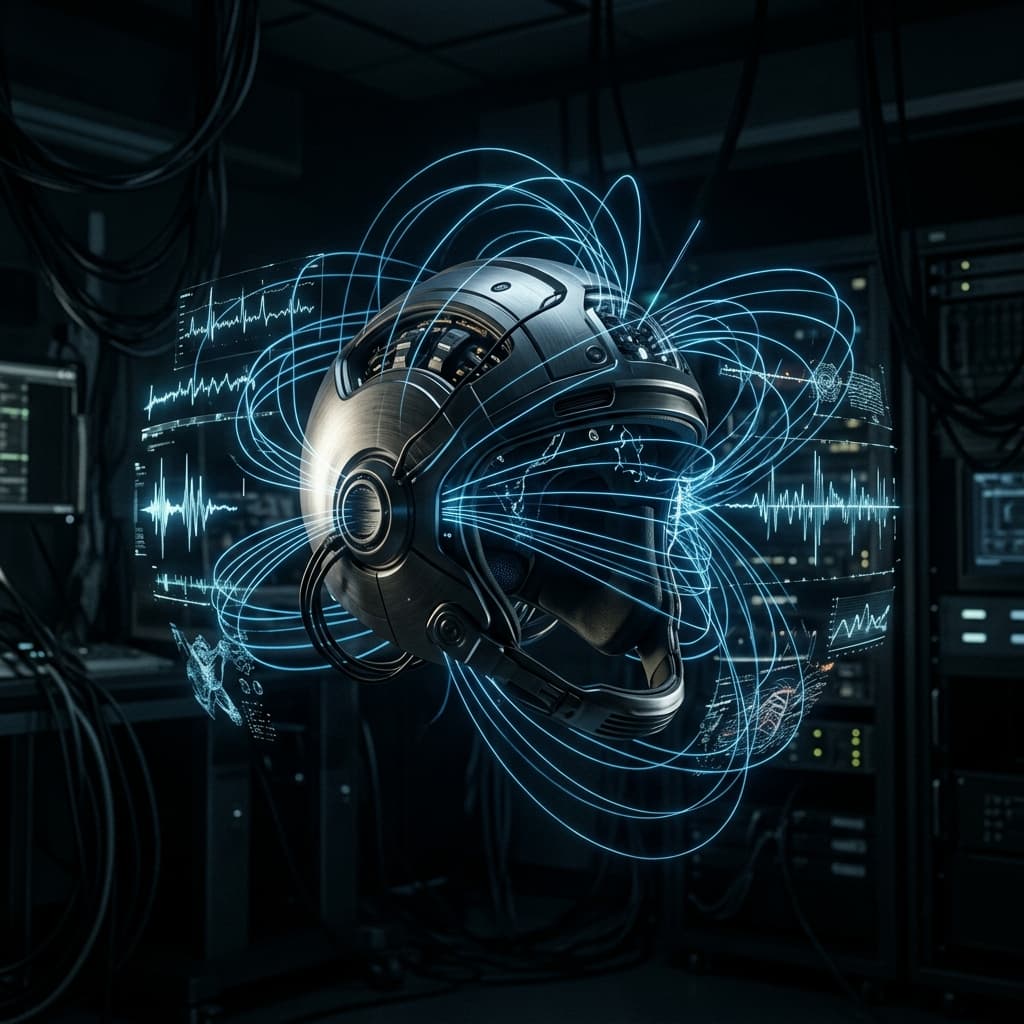
Meta Brain2Qwerty v2: when the mind becomes a keyboard with 61% accuracy
Meta decodes brain activity into text with 61% accuracy — no surgery required. What this changes for business, healthcare, and accessibility.