The Factory that Makes Robots: What Foshan Changes for the World
China opened the first autonomous factory in Foshan where robots build other robots. What this means for Brazilian SMEs in 2026.
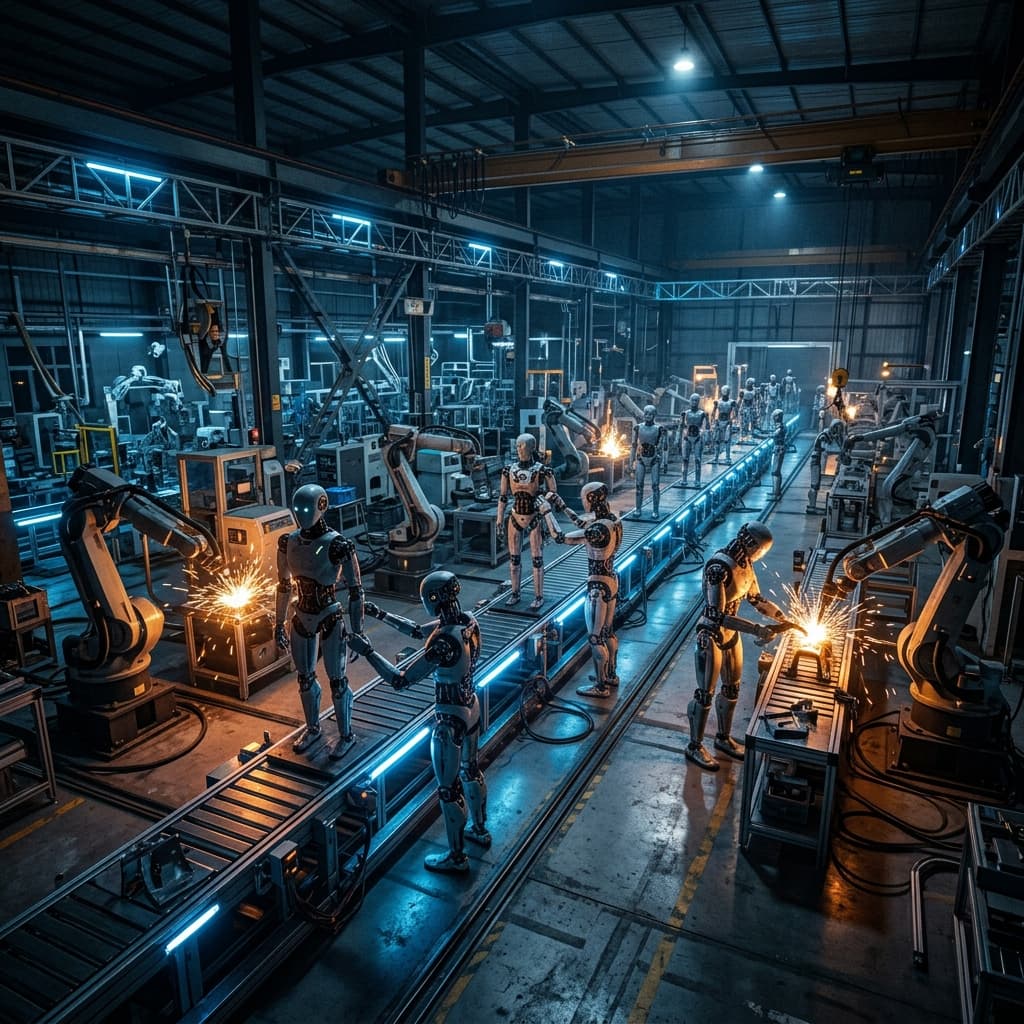
When the first fully autonomous production line in Foshan, China, began operating, it was not manufacturing smartphones, automobiles, or semiconductors. It was manufacturing itself, or almost. Humanoid robots and integrated industrial automation systems now assemble other robots, without direct human intervention on the factory floor. Installed capacity is 10,000 units per year, and the signal this sends to the global market is unequivocal, robotics is ceasing to be an asset exclusive to large corporations and becoming accessible infrastructure.
For those who run an SME in Brazil, this is not technology news. It is news about cost, competitiveness and a window of opportunity.
What Foshan is and why it matters now
Foshan is an industrial city in the heart of Guangdong province, the same region that includes Shenzhen, the epicenter of consumer electronics manufacturing. It is no coincidence that China chose that location to install what is being called a "dark factory" of robotics, a plant that operates with minimal lighting because there are no human workers who need to see.
The facility is operated by next-generation humanoid robots, models capable of performing precision assembly tasks that, until two years ago, required human hands. The process ranges from handling electronic components and sensors to functional testing and final packaging. Integration between robotic arms, computer vision systems and AI for quality control is what makes operating at scale without constant supervision possible.
The direct result: a drastic reduction in unit production cost for robots, in a self-reinforcing cycle. The more robots are produced autonomously, the cheaper it becomes to produce the next batch.
The price-decline cycle already in motion
The logic will be familiar to anyone who followed the curve for solar panels or lithium batteries, when intensive automation and scale cause costs to fall nonlinearly. In the case of solar panels, the price per watt fell by more than 90% over fifteen years. Industrial robotics is entering a similar curve, compressed in time.
Today, a quality collaborative robot (cobot) costs between $15,000 and $50,000, depending on the application. Industry analysts, including projections from Goldman Sachs and the IFR (International Federation of Robotics), point out that the combination of autonomous manufacturing at scale and advances in embedded AI could reduce that floor to the $5,000 to $10,000 range by 2027. Foshan is the physical evidence that this trajectory is not speculation, it is an industrial process in progress.
What changes in practice for an SME
Here is the point that really matters for business readers: you do not need to wait until 2027 to start preparing. The evaluation window is now.
High-volume repetitive tasks
Packaging lines, sorting and palletizing are the first obvious targets. A cobot operating two shifts replaces between 1.5 and 2 high-turnover positions, with measurable ROI between 18 and 36 months in the current Brazilian context, considering labor costs, payroll taxes and losses from turnover.
High-risk environments
Operations with chemicals, extreme temperatures or repetitive physical strain already have established automation use cases. With hardware costs falling, break-even is reached faster, and the regulatory argument (NR-12, NR-17) becomes an ally of the investment decision, not an obstacle.
Internal logistics and picking
Internal movement robots, AGVs (Automated Guided Vehicles) and AMRs (Autonomous Mobile Robots) are already in use in medium-sized distribution centers in Brazil. With prices falling and supply increasing, this technology should reach viability for warehouses in the 3,000 to 10,000 m² range by 2026.
The strategic lesson Foshan teaches
There is a common trap among SME managers when the subject is automation, waiting for the perfect moment when the price "has fallen enough." The problem is that when the price falls, competitors are already operating with the advantage. The company that begins mapping its processes and running pilots now arrives at 2026 with accumulated learning. The one that waits arrives with a competitive deficit.
At FM Solutions, I have advised clients in Brazil, Italy and the United States with the same approach, do not start with the robot, start with the process. Map repetitive, high-volume or high-risk tasks. Quantify the real cost, including turnover, rework and accidents. Then evaluate which technology solves that specific problem. Hardware will get cheaper, organizational learning time will not.
The most important signal from Foshan
The opening of the Foshan factory is not just an engineering achievement. It is an industrial statement of intent at national scale. China is building robotics manufacturing infrastructure with the same logic it used to dominate solar panel and battery production: volume, speed and vertical integration of the supply chain.
For Brazil, which imports most automation equipment, this means dependency on foreign suppliers will increase in the short term, and access costs will fall in the medium term. That is the interval in which companies that plan ahead will come out ahead.
The factory that makes robots is not the future. It is the industrial present that arrived sooner than most managers expected.

Thinking Machines Lab launches Inkling: 975 billion open-weight parameters
Mira Murati's Thinking Machines Lab launches Inkling, an open-weight MoE model with 975 billion parameters. What changes for Brazilian companies?

Kimi K3: the largest open-weight model ever released has 2.8T parameters
Moonshot released Kimi K3: 2.8 trillion parameters and a 1-million-token context window. What actually changes, and what open-weight really delivers.
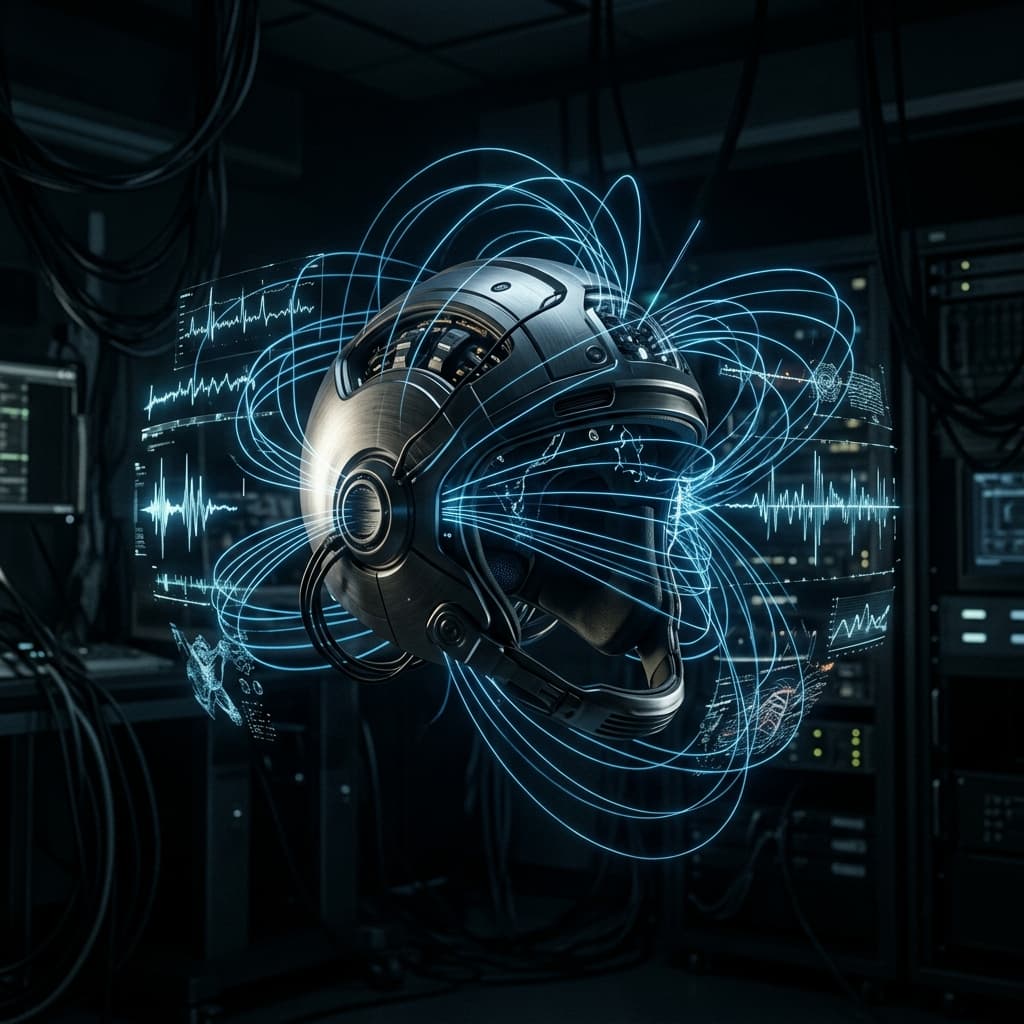
Meta Brain2Qwerty v2: when the mind becomes a keyboard with 61% accuracy
Meta decodes brain activity into text with 61% accuracy — no surgery required. What this changes for business, healthcare, and accessibility.