Advanced Robotics: PwC Identifies the Technology Already Reinventing Business
PwC has flagged advanced robotics as a near-term reinvention technology. What does that mean in practice for SMBs in Brazil?
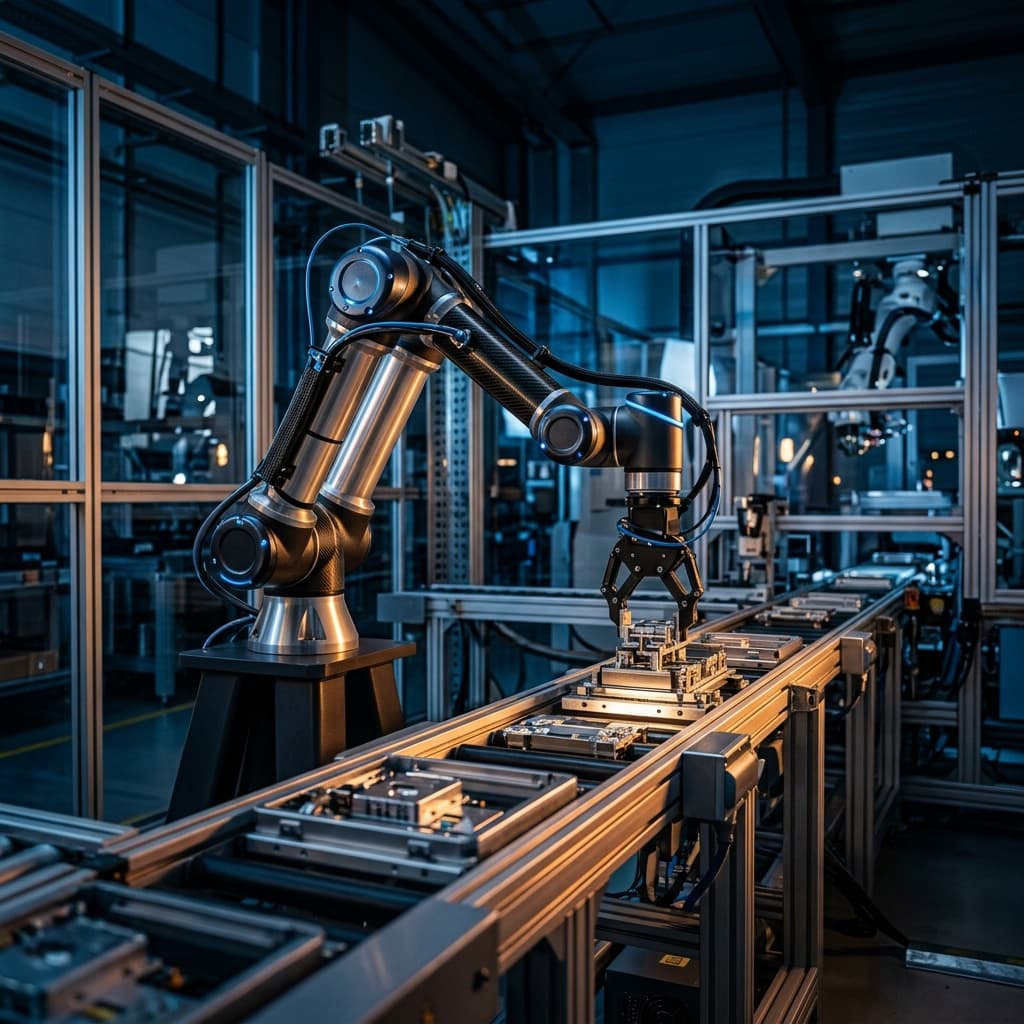
PwC does not use the word "reinvention" loosely. When the firm's latest emerging-technology outlook positioned advanced robotics as one of the near-term transformation technologies, not a decade away but already here, the message to business leaders was clear: the window for early-mover advantage is closing.
The report describes how sophisticated robotic systems are already transforming complex, labor-intensive physical processes, delivering measurable gains in productivity, operational safety, reliability, and data-driven decision-making. This is not laboratory theory. It is active deployment.
What PwC Means by "Advanced Robotics"
It is worth being precise about what is at stake. Advanced robotics, in the context of the PwC report, is not the repetitive mechanical arm on an automotive assembly line from the 1980s. We are talking about systems that combine three technological layers in an integrated way:
- Enhanced sensory perception , computer vision, LiDAR, force and touch sensors that allow the robot to "understand" its surrounding environment in real time.
- Embedded intelligence , machine learning models that enable adaptation to process variations without manual reprogramming every time something changes.
- Mobility and collaboration , robots that move through the work environment (AMRs, or Autonomous Mobile Robots) and operate alongside humans with certified safety standards (cobots).
Companies such as Boston Dynamics (with Spot and Stretch), ABB Robotics, Fanuc, and startups like Machina Labs are bringing this combination to sectors well beyond traditional manufacturing, including logistics, healthcare, construction, agribusiness, and high-volume retail.
Why Now? What Has Changed in the Equation
For years, the argument against robotics in SMBs was straightforward: high capital cost, integration complexity, and uncertain return. That argument is being eroded by three simultaneous forces.
The Cost Has Fallen Structurally
The average price of a functional cobot, such as those in the Universal Robots UR3e or UR5e line, sits in the range of US$30,000 to US$50,000, with documented payback in 12 to 18 months in two-shift operations. The Robotics-as-a-Service (RaaS) model, adopted by companies like Formic in the United States, allows factories to pay per hour of robotic operation, eliminating the upfront capital outlay. Formic charges between US$8 and US$20 per hour, below the total cost of a human operator in many markets.
Labor Scarcity Has Become Real Pressure
In Brazil, sectors such as food and beverage, packaging, and internal logistics face annual turnover above 80% in repetitive operational roles. In metropolitan areas like São Paulo and Recife, difficulty retaining workers in shop-floor functions already forces line stoppages. Robotics is no longer about replacing workers; it is about stabilizing operations that are today chronically vulnerable to absences and turnover.
Integration Has Become More Accessible
Platforms such as ROS 2 (Robot Operating System), combined with computer vision APIs from AWS, Google, and Microsoft Azure, have reduced integration time from months to weeks for standardized processes. Local integrators in Brazil, particularly along the São Paulo, Campinas corridor, already have ready-built stacks for palletizing cells, quality inspection, and internal material handling.
A Concrete Case: A Palletizing Cell at a Food-Sector SMB
Consider a mid-sized company in the interior of São Paulo, with annual revenue of R$40 million, producing packaged food products. The longstanding bottleneck is at the palletizing line at the end of the conveyor: a manual process, a high rate of repetitive-strain injury leave, and throughput that varies with the mood of the shift.
Deploying a robotic cell with a FANUC CRX-10iA cobot, a collaborative arm with a 10 kg payload, integrated with a 2D vision system for SKU identification and an adapted conveyor, costs between R$280,000 and R$380,000 all-in, including integration. Output moves from 8 pallets per hour (with human variability) to a consistent 14 pallets per hour, with full traceability of each palletized unit via ERP.
What changes in practice? A 60% reduction in injury-related absences in the area, elimination of overtime during demand peaks, and one outcome managers rarely anticipate: operational data quality improves dramatically. The robot logs every cycle, which becomes direct input for production planning, predictive maintenance, and negotiations with distributors.
What Managers Need to Do Before Buying
PwC is right to call advanced robotics a near-term reinvention technology, but there is a common trap: companies buy robots before mapping the process. Robotics amplifies what already exists. A poor process with a robot is still a poor process, just more expensive and more rigid.
The correct starting point is a value stream mapping (VSM) exercise to identify the three or four most repetitive, predictable, and high-error-cost bottlenecks. Those are the natural candidates for a first robotic cell. From there, a real-scale pilot, not a lab proof of concept, delivers the data needed to make an expansion decision.
The Advantage Window Still Exists, But It Is Closing
When PwC names a technology as a near-term priority in its emerging-tech radar, the historical pattern shows that the market takes 18 to 36 months to price that competitive advantage into the broader landscape. Companies that deploy and learn now build operational know-how that cannot be quickly replicated.
For Brazilian SMBs competing in markets where margin and efficiency are matters of survival, the question is no longer whether advanced robotics will arrive. It is whether you will lead the curve or chase it.

Thinking Machines Lab launches Inkling: 975 billion open-weight parameters
Mira Murati's Thinking Machines Lab launches Inkling, an open-weight MoE model with 975 billion parameters. What changes for Brazilian companies?

Kimi K3: the largest open-weight model ever released has 2.8T parameters
Moonshot released Kimi K3: 2.8 trillion parameters and a 1-million-token context window. What actually changes, and what open-weight really delivers.
Meta Brain2Qwerty v2: when the mind becomes a keyboard with 61% accuracy
Meta decodes brain activity into text with 61% accuracy — no surgery required. What this changes for business, healthcare, and accessibility.