Uber and Rivian's $300M Robotaxi Bet: What It Really Means for the Future of Autonomous Mobility
Uber commits $300M to Rivian's electric robotaxi fleet — a bet that reshapes autonomous mobility, labor markets, and urban logistics.
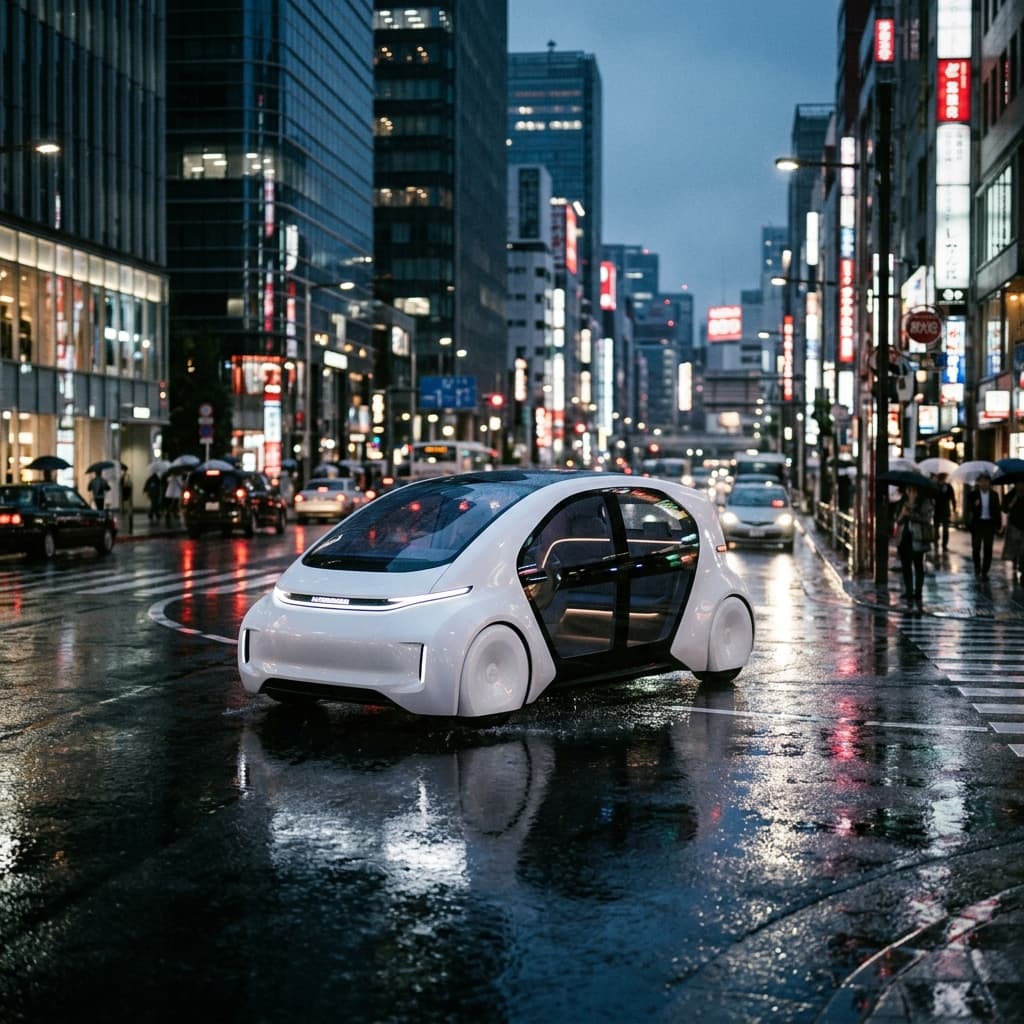
The deal was announced quietly, but its implications are anything but subtle. Uber has committed $300 million to help Rivian build and deploy a commercial robotaxi fleet — a move that places two of the most ambitious names in American transportation on the same side of a very large wager. This isn't a pilot program or a press-release partnership. It's a capital commitment with strategic teeth, and business leaders across industries should be paying close attention.
The Strategic Logic Behind the Investment
Uber has tried the autonomous vehicle path before — and retreated. The company sold its self-driving unit, Advanced Technologies Group, to Aurora Innovation in 2020 after burning through capital without a clear path to commercialization. So why return now?
The answer lies in maturity of the technology stack and the changing economics of fleet electrification. Rivian, known for its electric trucks and SUVs backed heavily by Amazon, brings genuine manufacturing credibility to the table. Unlike pure software plays, Rivian builds real vehicles — and Uber's $300 million essentially accelerates the deployment of a purpose-built robotaxi platform at commercial scale.
This is not Uber hedging its bets. This is Uber placing one. The company is betting that the next wave of ride-hailing won't require human drivers — and that partnering with Rivian gets them there faster than building in-house or waiting for Waymo to dominate the market.
What This Means for the Labor Equation
Let's be direct about something the press releases tend to soften: this deal accelerates the displacement of professional drivers at scale. Uber currently operates in over 70 countries, with millions of driver-partners generating income on the platform. A successful robotaxi rollout doesn't eliminate those drivers overnight — but it fundamentally shifts the long-term value proposition of the platform away from human labor.
For policymakers in Brazil, Italy, and the US, this is a signal worth taking seriously. The gig economy has already strained labor protections across all three markets. Autonomous fleet deployment will force an entirely new legal and regulatory conversation — one that legislators in Texas are already beginning to navigate with frameworks like TRAIGA, which attempts to define accountability in AI-driven systems.
The Infrastructure Question Nobody Is Asking
Deploying a robotaxi fleet isn't just a software problem or a vehicle problem — it's an infrastructure problem. Charging corridors, fleet maintenance hubs, remote monitoring centers, and real-time mapping dependencies all require significant urban investment. Cities that want to attract this technology will need to compete on infrastructure readiness, not just regulatory permissiveness.
This mirrors dynamics we're seeing across the AI hardware landscape. Just as Nvidia's Vera Rubin platform is pushing the frontier of autonomous systems processing, the physical world needs to keep pace with what the software is capable of delivering. The gap between what AI can do and what cities can support is becoming one of the defining bottlenecks of this decade.
The Business Model Underneath the Headlines
For investors and enterprise strategists, the more interesting question isn't whether robotaxis will exist — they will — but who captures the economic surplus when the driver cost disappears from the equation.
Today, Uber pays out roughly 70-80% of trip revenue to drivers. Remove that cost, and the unit economics of ride-hailing transform entirely. Even assuming lower per-trip pricing to drive adoption, Uber's margin profile in a robotaxi-dominant world looks dramatically different from today's. The $300 million investment begins to look less like a cost and more like a down payment on a fundamentally different P&L.
This is consistent with broader trends: AI-driven productivity gains are increasingly being characterized not as enhancements to existing models, but as wholesale replacements of cost structures. The CFOs paying attention to this deal should be stress-testing their own industries for similar dynamics.
What Comes Next
Uber and Rivian have not announced a commercial launch date. Regulatory approval for driverless commercial operation remains a significant hurdle in most markets. But the trajectory is clear: this partnership will produce vehicles on public roads within the next two to three years, initially in controlled geographies with favorable regulatory environments.
The companies that will be disrupted aren't just taxi operators and logistics firms. Insurance underwriters, fleet management software providers, municipal transit authorities, and real estate developers building around commuter patterns are all in the blast radius of this shift.
The question for every business leader reading this isn't whether autonomous mobility will change your industry. It's whether you'll be ready when it does.
At FM Solutions, we help organizations think through exactly these kinds of structural disruptions — mapping the second and third-order effects of technology shifts before they become unavoidable surprises. The Uber-Rivian deal is a data point. What you do with that data point is a strategic choice.

Google Places Ads in AI Mode: What Changes for Online Sellers
Google is testing ads in AI Mode and AI Overviews. For SMBs, organic space is shrinking and paid media strategy needs to change now.

Google and ChatGPT integrate ads into AI, what this means for SMEs
Google Ads joins AI Overviews and ChatGPT opens its ads platform. Understand what changes in practice for advertisers in Brazil.

Google and Microsoft Integrate Ads into AI, The End of SEO as You Know It
Google and Microsoft are embedding ads in AI responses. Organic traffic shrinks and SMEs must act now to avoid disappearing.