2026 Trends: Accessible AI Is Transforming Personalization and Inventory for Small Businesses
How affordable AI tools are reshaping how small businesses manage stock, serve customers, and compete with enterprise giants.
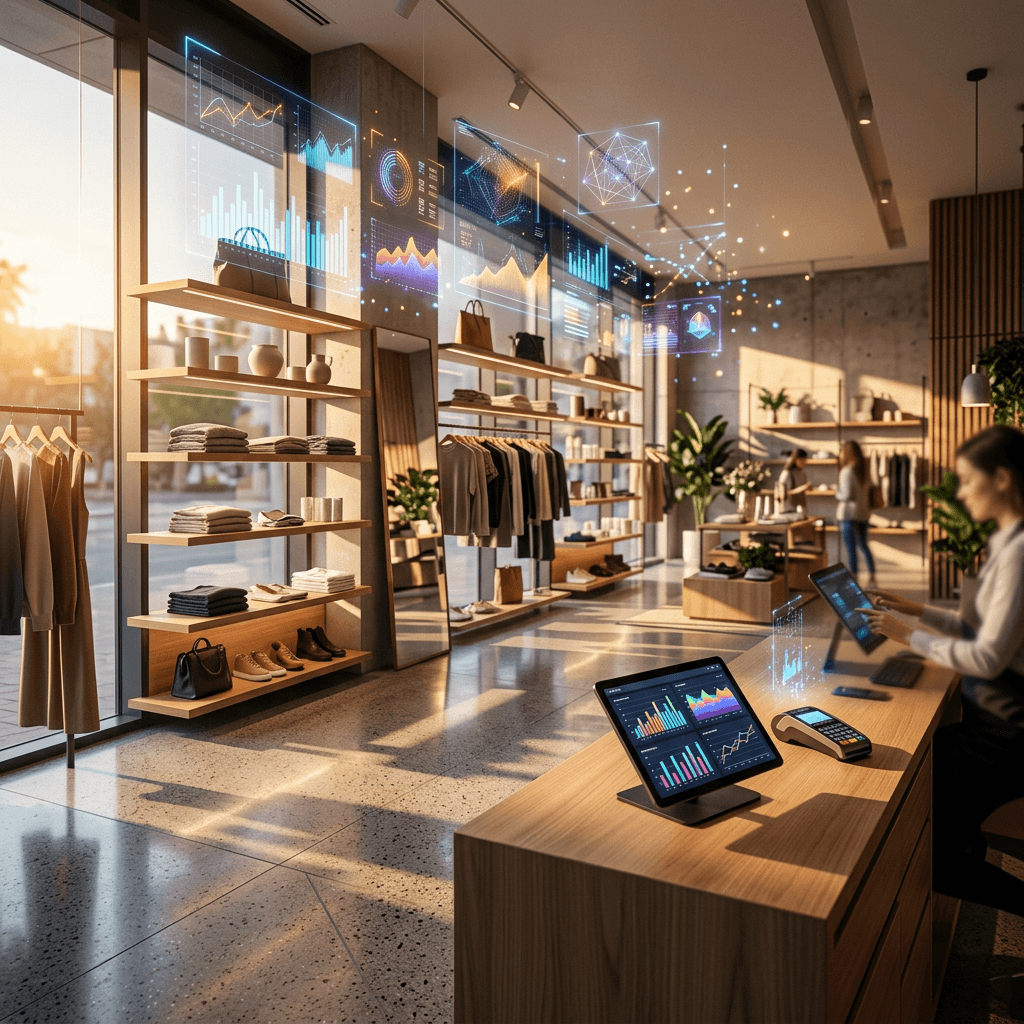
The Playing Field Is Finally Leveling
For decades, the competitive gap between large corporations and small businesses has been reinforced by one invisible wall: access to sophisticated technology. Enterprise retailers could afford demand forecasting systems, CRM platforms with behavioral segmentation, and dynamic pricing engines. The neighborhood boutique, the family-run hardware store, the independent restaurant — they managed with spreadsheets and intuition.
That wall is crumbling in 2026. And it's crumbling faster than most business consultants predicted.
Affordable, modular AI tools — many of them subscription-based, requiring no technical staff — are now within reach of businesses with five employees and a modest monthly budget. This is not a distant promise. It is already reshaping how small and medium-sized enterprises (SMEs) manage inventory, communicate with customers, and position themselves in the market.
Inventory Intelligence: From Guesswork to Precision
One of the most painful chronic problems for small businesses is inventory management. Order too much, and cash flow suffers. Order too little, and customers walk away. Traditional solutions required either expensive ERP systems or years of hard-won intuition. Neither scales well under volatile demand.
AI-powered inventory tools — many integrated directly into platforms like Shopify, WooCommerce, or even WhatsApp Business via API — now analyze historical sales data, seasonal trends, local events, and even weather patterns to generate restocking recommendations with remarkable accuracy. What was once available only to retailers with dedicated data science teams is now a $30-per-month plugin.
The implications are significant. A small clothing retailer in São Paulo can now anticipate demand spikes before Carnival. A hardware shop in Milan can predict which products will move after a regional construction boom. The AI doesn't replace the owner's knowledge — it amplifies it.
This trend connects directly to Microsoft's agentic AI solutions for retail, which are increasingly being packaged into scalable tiers accessible to smaller operators — not just the enterprise accounts Microsoft has historically courted.
Personalization at Scale: No Longer a Luxury
The second major transformation is in customer experience. Personalization — the ability to treat each customer as an individual, with relevant offers, communication timing, and product recommendations — has historically required both data infrastructure and marketing sophistication that small businesses simply couldn't afford.
In 2026, that calculus has changed. Tools like lightweight CRM systems powered by generative AI can now draft personalized follow-up messages, segment customer lists by behavior, and trigger targeted promotions without a marketing department. A bakery can automatically send a birthday discount to a loyal customer. A local gym can identify members at risk of canceling and reach out with a retention offer — all automated, all personalized.
Generative AI, in particular, has unlocked a new category of "one-person marketing departments" — small business owners who, with the right tools, can execute campaigns with the sophistication of a mid-size agency. The key shift is that AI is no longer just an efficiency tool; it's a revenue generation tool.
This is especially relevant in Brazil, where — as Amazon and Google executives highlighted at the BTG Summit 2026 — AI adoption is increasingly framed as a survival necessity, not a competitive advantage. The businesses that adapt will outpace those that don't, regardless of size.
The Cost Curve Has Collapsed
What makes 2026 genuinely different from previous years is the economics. The cost of deploying AI has dropped dramatically, driven by increased competition among model providers, the commoditization of cloud infrastructure, and the proliferation of open-source frameworks. This echoes broader trends in infrastructure investment, including the massive buildout underway from players like OpenAI and SoftBank, whose investments in data center capacity are pushing compute costs down the curve.
For a small business owner, this means: AI that would have required a six-figure implementation budget three years ago now costs roughly the same as a basic accounting software subscription. The barrier is no longer financial — it's awareness and adoption.
What Smart SME Owners Are Doing Right Now
- Auditing their data first. AI tools are only as good as the data they're fed. Owners who clean up their sales records, customer lists, and product catalogs first see dramatically better results.
- Starting narrow. The most successful SME AI deployments focus on one high-impact problem — usually inventory or customer reactivation — before expanding.
- Choosing composable tools. Rather than all-in-one platforms that lock them in, savvy owners are selecting modular tools that integrate with systems they already use.
The Risk of Waiting
There is a temptation among small business owners to wait — to see if AI "really works" before committing. That window is closing. Early adopters are already building data moats: months of AI-generated insights that compound over time, making their forecasting and personalization increasingly precise.
The businesses that move now aren't just gaining efficiency. They're building an operational foundation that will be increasingly difficult for late adopters to replicate. In 2026, accessible AI isn't a trend to watch — it's a decision to make.

Thinking Machines Lab launches Inkling: 975 billion open-weight parameters
Mira Murati's Thinking Machines Lab launches Inkling, an open-weight MoE model with 975 billion parameters. What changes for Brazilian companies?

Kimi K3: the largest open-weight model ever released has 2.8T parameters
Moonshot released Kimi K3: 2.8 trillion parameters and a 1-million-token context window. What actually changes, and what open-weight really delivers.

Meta Brain2Qwerty v2: when the mind becomes a keyboard with 61% accuracy
Meta decodes brain activity into text with 61% accuracy — no surgery required. What this changes for business, healthcare, and accessibility.