Microsoft Unveils Revolutionary Agentic AI Solutions for Retail
Microsoft introduces innovative AI solutions like Copilot Checkout and agent-based tools, set to transform retail operations and customer experiences.
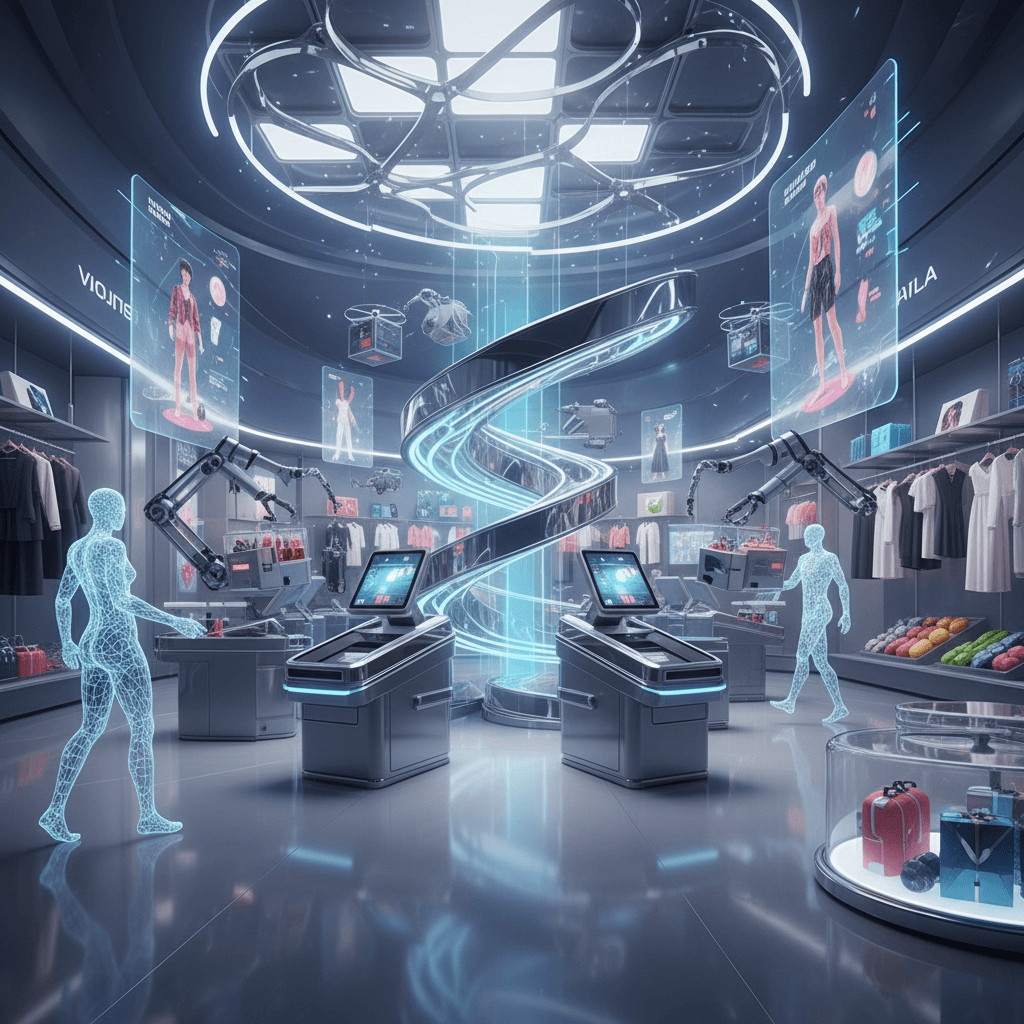
Microsoft Introduces Revolutionary Agentic AI Solutions for Retail
As the technological landscape continues to evolve, Microsoft's recent announcement of its new agentic AI solutions, including Copilot Checkout, marks a significant turning point for the retail industry. These solutions are not just incremental improvements but represent a paradigm shift in how retailers approach automation in operations, merchandising, and customer interactions.
An Overview of Microsoft's Retail AI Solutions
At the heart of Microsoft's latest offering are agent-based automation tools designed to enhance every facet of retail operations. These tools aim to streamline processes from the back-end supply chain to front-end customer interaction, bringing about a new era of efficiency and personalization in retail experiences.
Copilot Checkout: Revolutionizing Point of Sale
Copilot Checkout is poised to redefine the checkout process. By integrating advanced AI capabilities, it promises to provide a streamlined, hassle-free experience for both staff and customers. This innovative system leverages machine learning to anticipate consumer needs, facilitate faster checkouts, and reduce human error, all while maintaining a high level of security and accuracy.
- Benefits for Retailers: Reduced waiting times, enhanced accuracy in transaction processing, and minimized checkout times.
- Customer Experience: Facilitates a smoother and more pleasant shopping experience, which can increase customer loyalty and satisfaction.
Agent-Based Automation Tools: Bringing AI to Every Retail Function
Microsoft’s new suite of agentic AI tools does not stop at the checkout. It includes highly sophisticated automation tools capable of augmenting efficiency and improving operational workflows across various aspects of retail.
Streamlining Store Operations
Agent-based tools are designed to optimize in-store operations, including inventory management, staff scheduling, and real-time analytics. By automating these functions, stores can reduce overhead costs, minimize stock discrepancies, and ensure efficient resource allocation.
- Inventory Management: Automates stock replenishment based on predictive demand analytics.
- Staff Operations: Utilizes AI-driven scheduling to improve workforce management.
Enhancing Merchandising Intelligence
In merchandising, these AI solutions can analyze vast datasets to extract meaningful insights. They help retailers forecast trends, understand consumer preferences, and personalize merchandising strategies to boost sales and customer engagement.
- Trend Forecasting: Enables proactive and informed decision-making with real-time data.
- Personalization: Tailors in-store experiences to match consumer expectations optimally.
Transforming Customer Experience with AI
Perhaps the most significant impact of Microsoft's new agentic AI solutions is on customer experience. By embedding AI into customer service, retailers can offer a more cohesive and responsive interaction model.
- AI-Driven Interactions: Delivers a personalized shopping experience, significantly improving customer satisfaction rates.
- Feedback Loops: Continuously learns from customer interactions to refine service delivery.
The Broader Implications for the Retail Industry
The introduction of Microsoft's AI initiatives marks the beginning of a transformative phase for the retail sector. By integrating such intelligent systems, retailers are equipped to handle the increasingly dynamic demands of modern consumers.
Challenges and Considerations
While the prospects seem promising, there are inevitable hurdles. Implementation costs, data privacy concerns, and the need for continuous updates present challenges that retailers must consider.
Conclusion
Microsoft's launch of these new solutions indicates the growing importance of AI in the retail sector. As these tools continue to develop, they will undoubtedly pave the way for smarter, more efficient retail environments, much like the impact of other AI-focused initiatives such as Samsung's Trust-by-Design AI Initiative and regulatory frameworks seen in the TRAIGA Regulation in Texas.
In conclusion, the deployment of agentic AI solutions is not merely a technological advancement but a transformative influence that could redefine the retail landscape as we know it.

GPT-6 Astra: OpenAI declares the 'AGI era' and reinvents enterprise agents
Released on September 3, 2026, GPT-6 Astra is OpenAI's largest training run and the first model classified as "Critical" in cybersecurity.
OpenAI Jalapeño: the chip challenging Nvidia in inference efficiency
OpenAI releases Jalapeño benchmarks: its in-house chip delivers up to 1.9x more work per watt and 3.6x lower latency than Nvidia's Blackwell.

Thomson 1.0: Thomson Reuters' Own Legal-Tax LLM
Thomson Reuters launches its first proprietary LLM with US$ 40M invested. What changes for law firms, legal departments, and tax practices?