McKinsey: AI and robots could automate 57% of work hours in the US
New McKinsey report shows AI and robotics already have the technical potential to automate more than half of work in the US. What does this mean for SMEs?

57% is not a forecast, it is a technical diagnosis of current capabilities
McKinsey & Company published an analysis that deserves careful attention, with the AI and robotics technology available now, companies could, in theory, automate approximately 57% of work hours in the United States. This is not a projection for 2035. It is an assessment of what is already technically feasible with existing systems, AI agents, large language models, robotic process automation and physical robotics.
That number, by itself, is striking. But what catches my attention in the report is not the percentage, it is the methodological conclusion behind it: companies that are getting real results are not adding automation on top of old processes. They are redesigning workflows from the ground up, with AI agents as protagonists, not as accessories.
This distinction is the heart of the debate for any SME manager in Brazil, Italy or the US who asks me where to start.
The most common mistake, automating the wrong problem
There is a classic trap I see repeatedly in consulting engagements with midmarket companies: leadership decides to "adopt AI" and, in practice, puts a chatbot in front of a process that was already dysfunctional. The result is a dysfunctional process with an expensive layer of technology on top.
McKinsey documents exactly this in its case studies. Companies that achieved measurable gains did not ask "how do I automate this task?" They asked, "If I designed this process from scratch, with AI agents available, what would it look like?"
This reversal of the question changes everything. A financial services company, for example, did not automate document triage, it eliminated triage as a step, because an AI agent began classifying, validating and routing contracts in real time, directly at system intake. The process did not just get faster, it became structurally different.
What AI agents are, and why they matter more than chatbots
The term needs precision, because it is used too loosely in the market. An AI agent is not just a model that answers questions. It is a system that receives an objective, plans the steps to achieve it, executes actions in external tools (APIs, databases, ERP systems, email) and iterates based on results, with variable human oversight.
Platforms such as Microsoft Copilot Studio, Salesforce Agentforce, Zapier AI Agents and the ecosystem around LangChain already allow building these agents without heavy software engineering. An SME with 50 people can today implement an agent that manages the procurement approval cycle, cross-checks supplier data and generates variance reports, without hiring a senior developer for every stage.
The entry cost has fallen dramatically. What is still missing, in most cases, is strategic clarity about which process to redesign first.
What the 57% figure means in practice for SMEs
When McKinsey says 57% of work hours are technically automatable, it is not saying 57% of jobs will be eliminated tomorrow. It is saying that within each function, finance, legal, customer service, logistics, HR, there is a substantial fraction of repetitive, data- and rules-based tasks that today consume human time unnecessarily.
For a Brazilian SME with tight margins, this has direct implications for competitiveness. While smaller companies hesitate, larger competitors and some more agile startups are already operating with lean structures because they redesigned processes with agents. The difference in operating cost starts to show up in price and delivery time.
Where to start, the three processes with the highest immediate return
Based on what I have implemented with clients over the past 18 months, the three processes that deliver the fastest return when redesigned with AI agents are:
- Lead qualification and follow-up, agents that query the CRM, cross-reference behavioral data and trigger personalized communications without human intervention until the right sales moment.
- Financial reconciliation and deviation alerts, agents connected to ERPs that identify inconsistencies, produce reports and escalate only exceptions to the manager.
- Onboarding of customers and suppliers, flows that collect documents, validate data against external sources and update internal systems automatically, reducing cycles from days to hours.
None of these cases requires replacing the ERP, hiring a data team or waiting for a two-year digital transformation. They require rethinking the process, and then choosing the right tool to execute it.
The question every manager should ask this week
The McKinsey report is not a warning about technological unemployment. It is, above all, a map of opportunity and competitive urgency. The technology to automate more than half of your companys operations already exists. The question is no longer "when will AI arrive?" It is: which process in your company will you redesign first?
Companies that answer that question with concrete action in 2025 will operate with cost structures their competitors will not be able to replicate quickly. Those that wait for the "right moment" will find that it has already passed.

Anthropic and the agents that operate computers: the end of advisory-only AI
Anthropic moves from AI that answers to AI that acts. Understand what changes for SMB operations in sales, support, and processes.

Hyperautomation by 2028: What Gartner's Forecast Changes for SMBs
Gartner predicts that 70% of companies will adopt hyperautomation by 2028. For Brazilian SMBs, this changes everything — find out where to start.
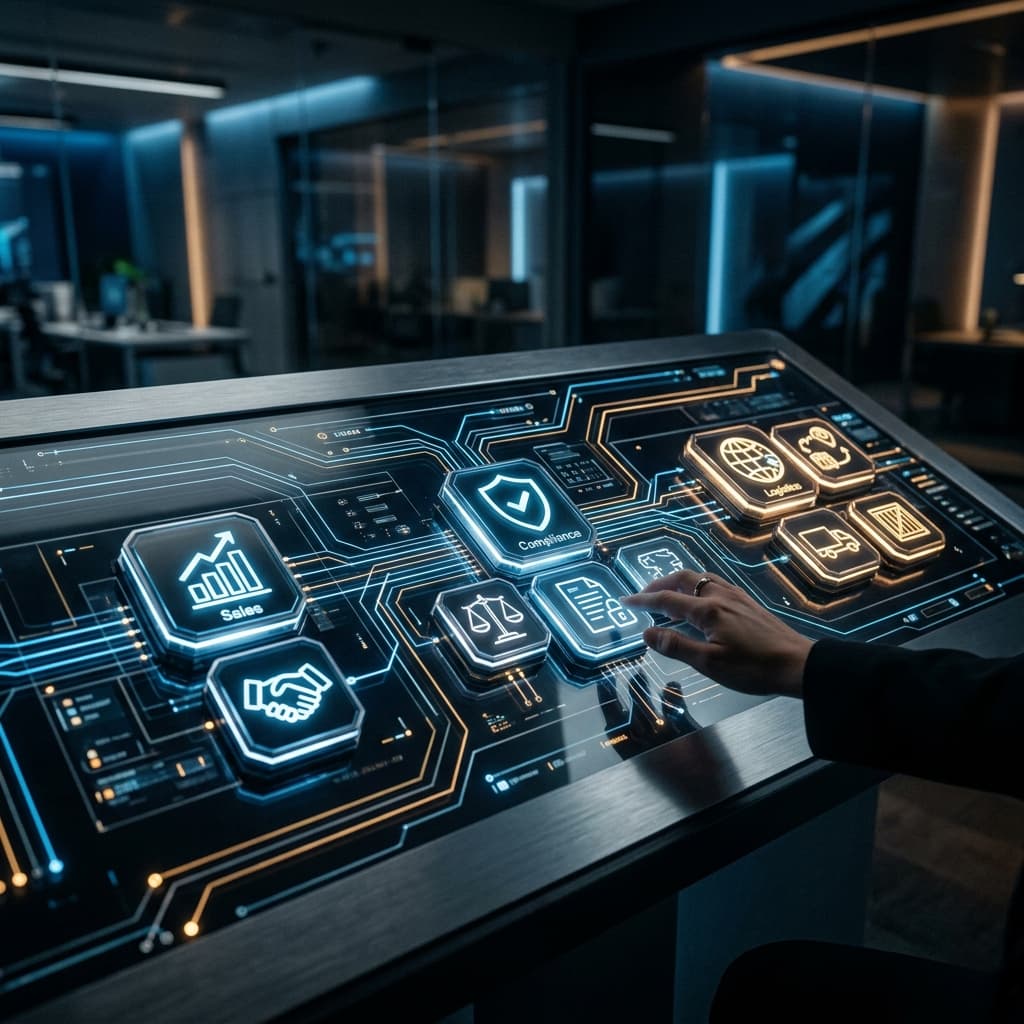
Verticalized Agents: The New Front in Automation for SMBs
Domain-specialized AI agents are replacing generalist models and enabling SMBs to automate complex tasks at low cost.