Samsung's 'AI-Powered Factories' Initiative Aims for 100% Autonomous Manufacturing by 2030
Samsung embarks on an ambitious 'AI-Powered Factories' initiative targeting fully autonomous manufacturing by 2030, leveraging cutting-edge AI technologies to enhance efficiency.
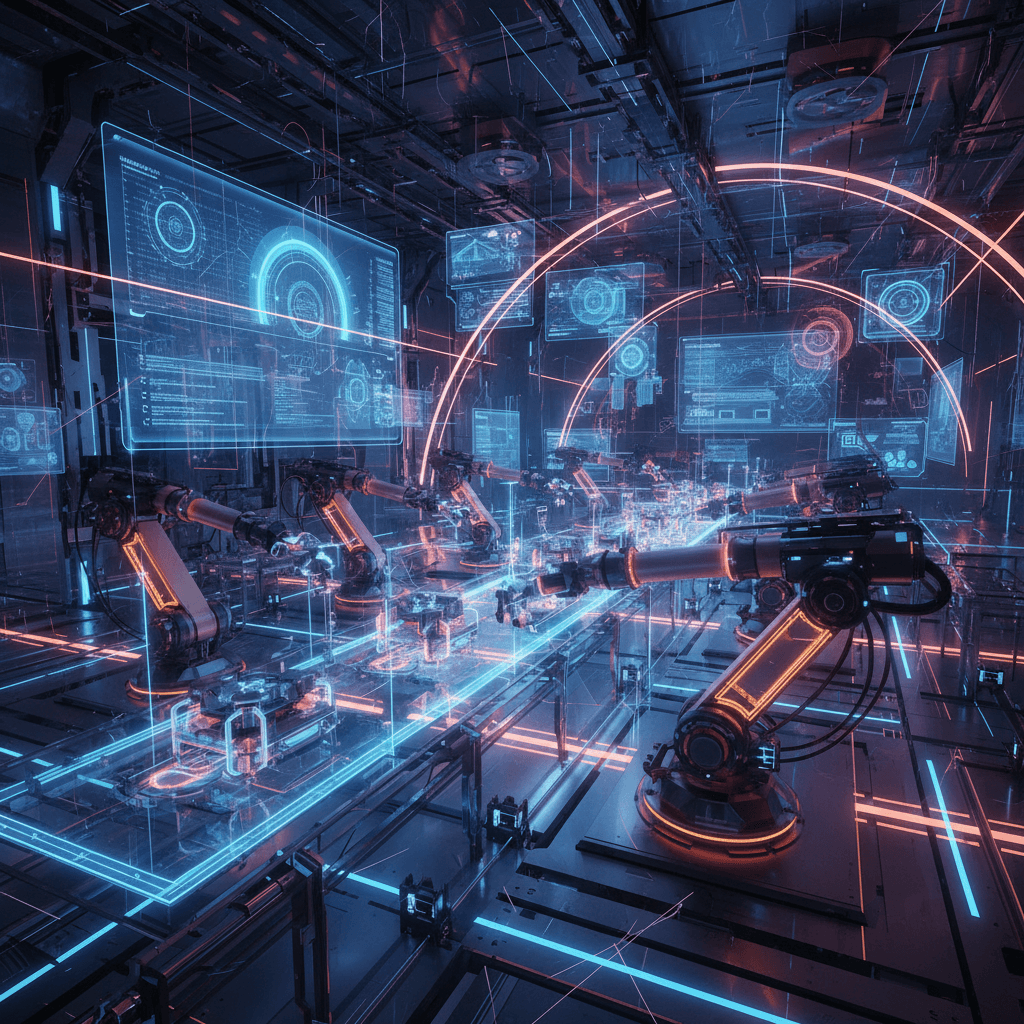
Samsung has announced its ambitious 'AI-Powered Factories' initiative, setting a bold target to achieve 100% autonomous manufacturing by 2030. This initiative is poised to revolutionize traditional manufacturing practices by integrating advanced AI technologies to optimize operations, reduce costs, and increase production efficiency.
Industry 4.0 and the Role of AI in Manufacturing
The concept of Industry 4.0, characterized by the convergence of new technologies, is reshaping how industries operate. At its core, this industrial revolution emphasizes digital transformation and the integration of AI, IoT, and advanced analytics. Samsung's initiative takes these principles and applies them towards creating factories that function autonomously, reducing human intervention in routine tasks.
Key Elements of the AI-Powered Factories
- Smart Automation: Implementing AI-driven machinery that can adapt to changing production needs in real-time without human oversight.
- Predictive Maintenance: Utilizing AI to predict equipment failures before they occur, ensuring minimal downtime and improved productivity.
- Quality Assurance: Enhancing product quality by employing AI to detect defects faster and more accurately than conventional methods.
The Technology Behind Samsung’s Vision
Samsung's initiative is rooted in leveraging cutting-edge technologies. This involves developing sophisticated AI algorithms capable of learning and improving over time. These algorithms will be pivotal in processing large volumes of data from various sensors installed across factory floors, offering insights that rationalize and streamline the manufacturing processes.
For example, Samsung can harness deep learning models to optimize supply chain logistics, enhancing the agility and responsiveness of manufacturing systems. Additionally, edge computing technology will play a crucial role as it allows data processing at the location of data generation, offering low latency solutions that increase real-time decision-making capabilities.
Challenges and Considerations
The transition to fully autonomous manufacturing is not without challenges. Key among them is ensuring data security, as the increased interconnectivity of devices creates more potential entry points for cyber threats. Moreover, the shift towards automation raises questions about workforce displacement, necessitating strategic planning to reskill workers.
Furthermore, regulatory compliance, as discussed in TRAIGA Regulation in Texas: A New 'Middle Path' AI Law Reshapes Compliance for Enterprises, will be essential as governments begin implementing laws governing AI deployment across industries.
The Road to 2030
As Samsung progresses towards its 2030 goal, it is crucial to monitor its developments closely. The company’s investment in R&D will likely spur innovations that extend beyond manufacturing, impacting various sectors and spurring competitive advancements in AI utilization.
Samsung’s 'AI-Powered Factories' initiative not only targets operational improvements but also aligns with broader technological trends, potentially setting standards for AI in industrial automation. As the initiative unfolds, it will be a testament to the transformative potential of AI in driving future-proof industries.

Anthropic and the agents that operate computers: the end of advisory-only AI
Anthropic moves from AI that answers to AI that acts. Understand what changes for SMB operations in sales, support, and processes.

Hyperautomation by 2028: What Gartner's Forecast Changes for SMBs
Gartner predicts that 70% of companies will adopt hyperautomation by 2028. For Brazilian SMBs, this changes everything — find out where to start.

Verticalized Agents: The New Front in Automation for SMBs
Domain-specialized AI agents are replacing generalist models and enabling SMBs to automate complex tasks at low cost.